Iconic Cartier Patiala Necklace
The world of high-end jewellery is defined by timeless masterpieces that bridge historical royalty and modern fashion trends, and few creations embody this cross-era charm as perfectly as the iconic Cartier Patiala Necklace. Rooted in the profound aesthetic and craft heritage of ancient Indian royal jewellery, this legendary piece redefined luxury jewellery design in the 20th century, while its enduring influence continues to shape the style and market orientation of modern wholesale jewelry necklace sets. This intricate connection between antique royal craftsmanship, classic luxury customization, and contemporary commercial jewellery design forms a unique jewellery ecosystem that spans nearly a century, integrating historical heritage, artistic innovation, and market practicality.
Crafted in 1928 by the prestigious French luxury house Cartier, the Patiala Necklace was a bespoke high-jewellery commission exclusively for Maharaja Bhupinder Singh of Patiala, one of the most extravagant royal rulers in pre-independence India. This monumental creation stands as one of the largest and most opulent single commissions in Cartier’s century-long history, showcasing the perfect fusion of European Art Deco design philosophy and traditional Indian royal jewellery aesthetics. Weighing over 1,000 carats in total, the necklace features an astonishing 2,930 meticulously selected diamonds, with its centerpiece being the legendary 234.69-carat pale yellow De Beers diamond, once ranked the seventh largest polished diamond in the world. Complementing this breathtaking center stone are seven rare large diamonds ranging from 18 to 73 carats, paired with premium Burmese rubies and pure platinum settings, forming a five-strand bib-style structure that exudes unmatched regal grandeur.
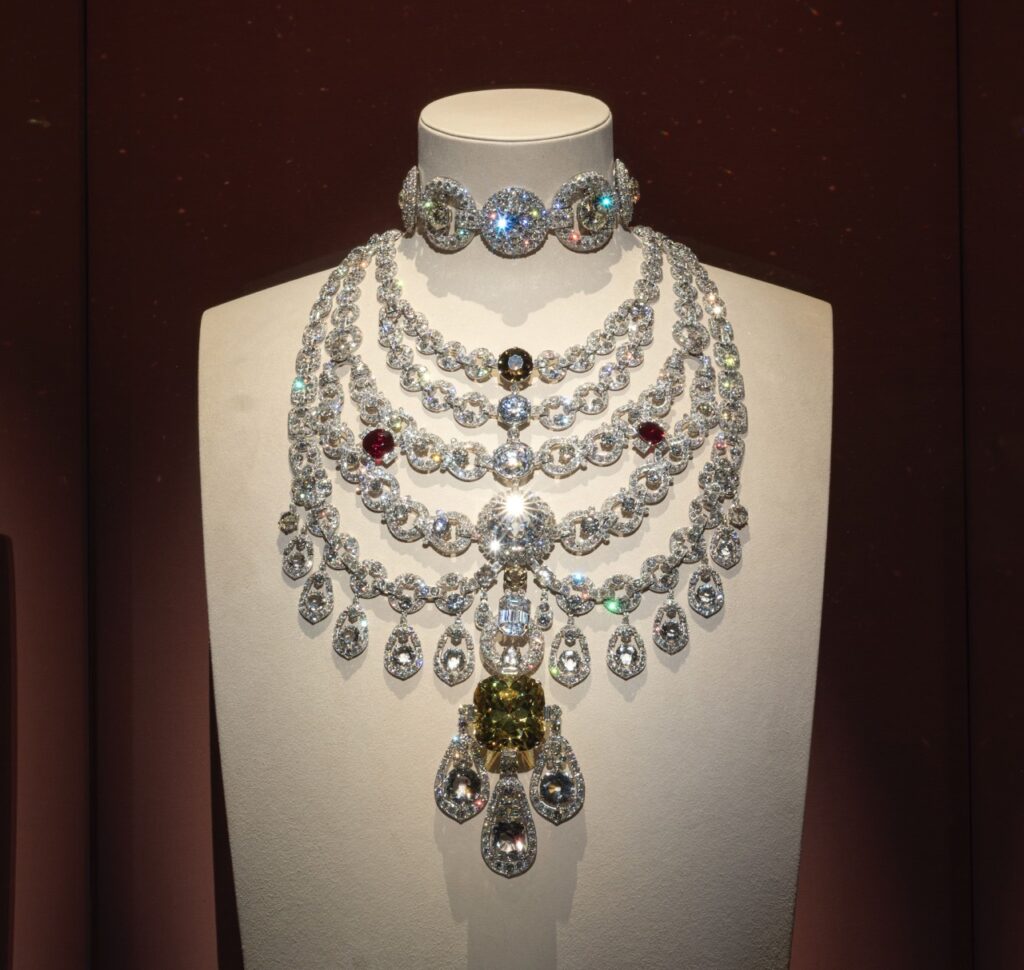
To fully understand the extraordinary value of the Cartier Patiala Necklace, one must trace the essence of ancient Indian royal jewellery, the cultural soil that nurtured its design soul. For thousands of years, Indian royal dynasties regarded jewellery as an indispensable symbol of sovereignty, status, and spiritual belief. Unlike Western jewellery that focuses on single stone highlighting and minimalist lines, ancient Indian royal jewellery emphasizes layered stacking, colorful gemstone inlay, and exquisite hand-carved details. Royal craftsmen of ancient India were proficient in blending diamonds, rubies, emeralds, and pearls, adopting unique mosaic and setting techniques to create works that are both gorgeous and profound. These jewellery pieces were not merely decorative accessories but important ritual treasures for royal ceremonies, weddings, and diplomatic occasions, carrying the historical memory and aesthetic pursuit of Indian feudal dynasties. The Patiala Necklace perfectly inherits this core feature of ancient Indian royal jewellery: its multi-layered strand design, luxurious gemstone matching, and grand visual tension all reflect the extravagant aesthetic standard of Indian royalty, while Cartier’s precise European craftsmanship endows the traditional Indian royal style with modern geometric beauty of the Art Deco era.
The legendary fate of the Cartier Patiala Necklace further elevates its historical and collectible value. After Maharaja Bhupinder Singh’s passing in 1938, the priceless necklace gradually disappeared from public view around 1948, becoming one of the most famous missing jewellery treasures in the world. For decades, its whereabouts remained a mystery, with many collectors and institutions searching for traces of this royal masterpiece. It was not until the early 2000s that part of the necklace’s fragments were rediscovered, and Cartier officially launched a comprehensive restoration project in 2012. After rigorous craftsmanship and detailed historical research, the restored Patiala Necklace reappeared in global luxury exhibitions, once again stunning the jewellery world. This twists-and-turns experience makes it not only a fine jewellery work but also a precious cultural relic witnessing the exchange between Eastern royal art and Western luxury craftsmanship in the early 20th century.
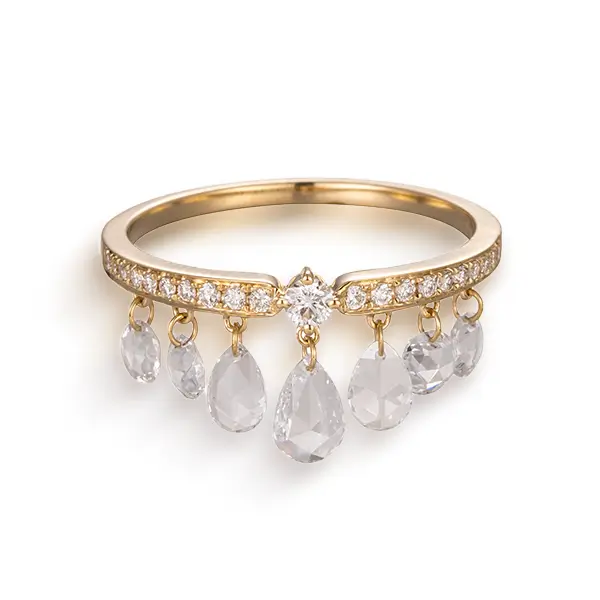
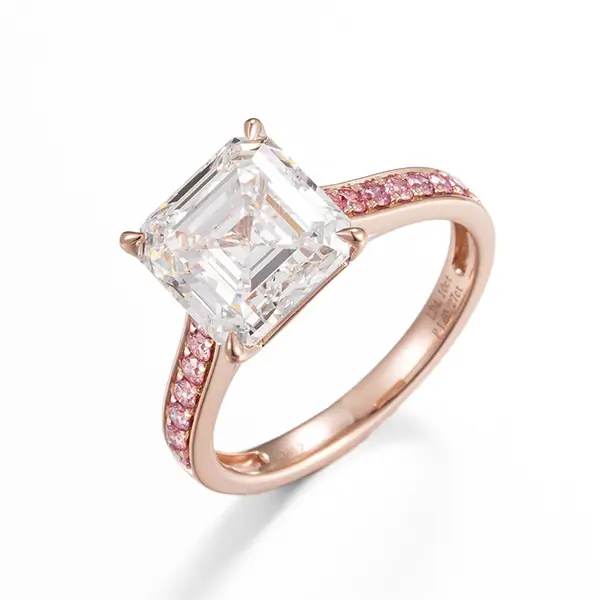
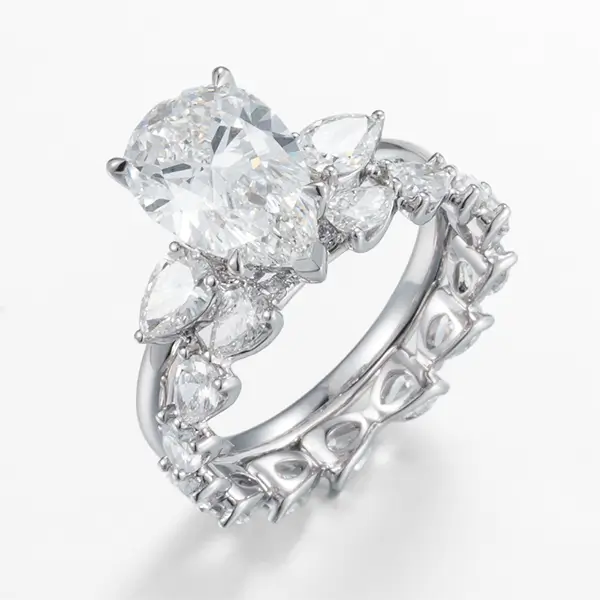
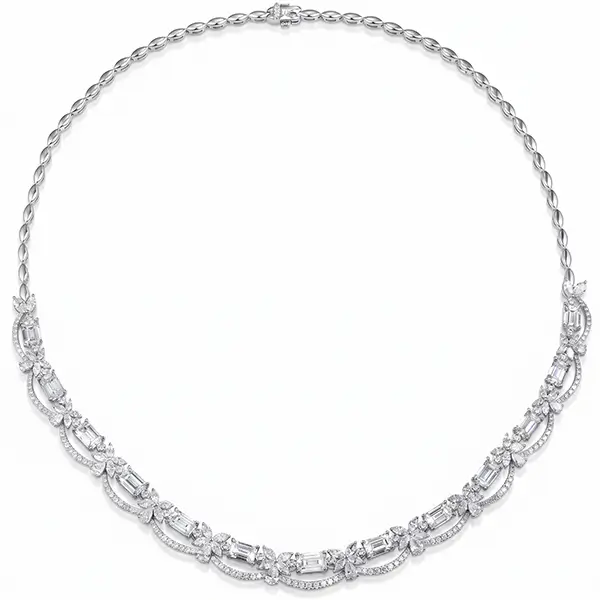
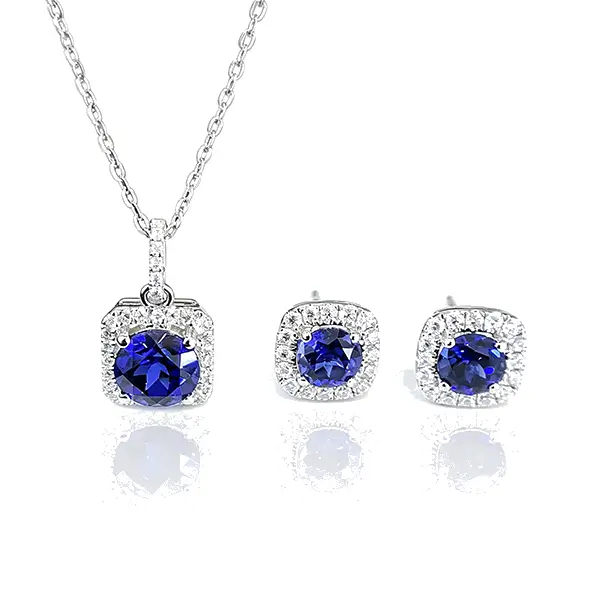
While the Cartier Patiala Necklace represents the pinnacle of one-of-a-kind royal high jewellery, its design genes and aesthetic concepts have profoundly influenced the development of modern civilian jewellery, especially the popular wholesale jewelry necklace sets in the global fashion market. In the contemporary jewellery industry, wholesale jewelry necklace sets focus on balancing classical aesthetics, diverse styles, and cost performance, catering to the mass consumer market’s demand for high-quality and fashionable matching jewellery. Many mainstream wholesale jewellery designers draw creative inspiration from ancient Indian royal jewellery and the Patiala Necklace’s design logic: they simplify the overly luxurious multi-gemstone stacking structure of royal jewellery, retain the classic layered necklace silhouette and colored gemstone matching elements, and launch affordable, versatile necklace sets suitable for daily wear, banquets, and commercial occasions.
Modern wholesale jewelry necklace sets fully absorb the heritage of ancient Indian royal jewellery in terms of detail design. Traditional Indian royal jewellery’s unique micro-carving, hollow-out inlay, and gradient bead stringing techniques are cleverly applied to mass-produced necklace sets. Designers often use artificial diamonds, simulated rubies, and high-quality alloy materials to replicate the grand visual effect of the Patiala Necklace, while optimizing the weight and structure of the jewellery to adapt to daily wearing needs. In addition, the matching set design of wholesale necklaces—usually paired with earrings, bracelets, or rings—also inherits the holistic collocation concept of ancient Indian royal formal jewellery, which pays attention to the unity and coordination of overall dressing accessories.
The integration of royal heritage and modern wholesale jewellery design has also promoted the diversified development of the global jewellery market. On one hand, the legendary story and classic design of the Cartier Patiala Necklace continue to nourish high-end custom jewellery creation, maintaining the eternal charm of ancient royal craftsmanship in the luxury field. On the other hand, the popularization of wholesale jewelry necklace sets enables ordinary consumers to access the aesthetic charm of ancient Indian royal jewellery, breaking the exclusive attribute of royal luxury and realizing the popular inheritance of classic aesthetics. This two-way development pattern makes ancient royal jewellery culture no longer a distant historical relic, but a living design source that continuously injects vitality into modern fashion.
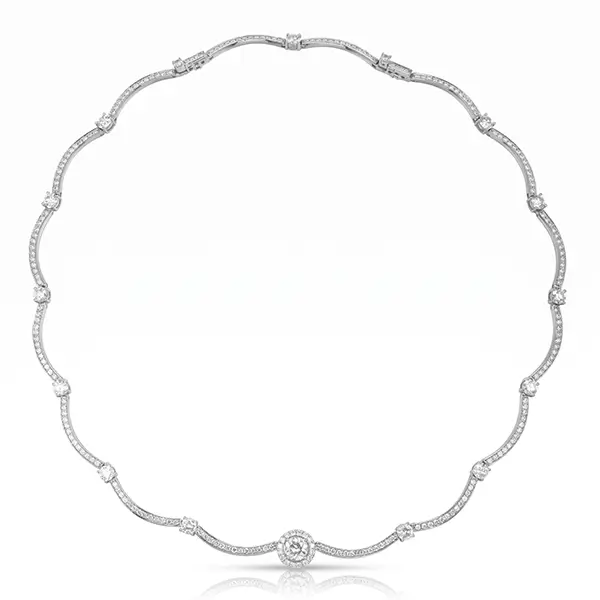
In conclusion, the Cartier Patiala Necklace is far more than a single luxury jewellery piece. It is a perfect carrier of ancient Indian royal jewellery’s aesthetic essence and craftsmanship, a milestone work of East-West jewellery art integration, and an important design benchmark for modern wholesale jewelry necklace sets. From the exclusive collection of Indian maharajas a century ago to the widespread fashion trend in the contemporary mass market, the heritage and innovation of this royal jewellery legend fully demonstrate the enduring vitality of classic craftsmanship. As the jewellery industry continues to evolve, the integration of traditional royal aesthetics and modern commercial design will surely create more excellent works that balance heritage and fashion, allowing the glory of ancient royal jewellery to shine permanently in the modern fashion era.